Source CE Certified Adjustable Skates for Tools, Shopping, Storage
Find CE Certified Adjustable Skates from 30 suppliers offering heavy-duty models with steel or nylon rollers. Compare capacities ranging from 3 to 24 tons, customization options, and warranty terms for industrial and storage applications.
Key considerations
Products List


Adjustable Inline Skates for Outdoor Men and Women Fashionable Inline Skates
$13.80 - $15.00
MOQ: 100 Pairs


Hot Selling Skates Roller Skates Shoes Wheels Adult Roller Skates Adjustable
$10.70 - $11.70
MOQ: 100 Pairs


Customizable Factory Sport Inline Speed Skates Speed Skates Roller Skate
$22.00 - $25.00
MOQ: 100 Pairs

High Quality Profession Adjustable Inline Roller Skates Quad Roller Skates
$315.00 - $325.00
MOQ: 100 Pairs


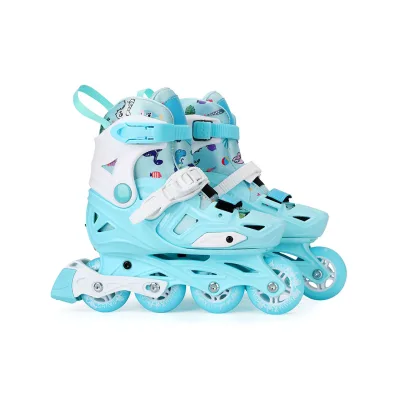
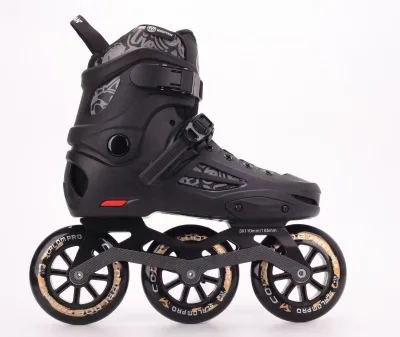


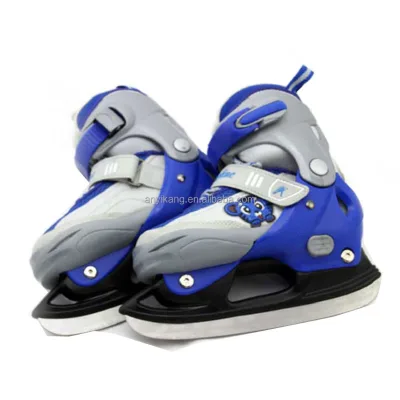
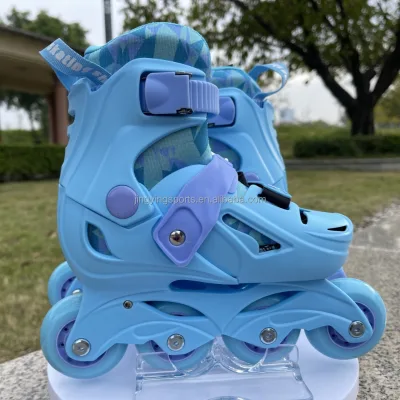


Inline Speed Professional Skates with PU Wheel Speed Inline Skate for Adult
$209.50 - $223.90
MOQ: 1 Pairs
Comprehensive Sourcing Guide
Strategic Sourcing Guide for CE Certified Adjustable Skates
Understanding the Product Landscape and Technical Specifications
When sourcing CE Certified Adjustable Skates, buyers must first navigate a diverse market where "adjustable" implies specific mechanical configurations rather than a single universal design. The product category encompasses heavy-duty industrial equipment, leisure skating gear, and specialized tools, each with distinct technical requirements. Based on available market data, the core mechanical attributes of these products vary significantly depending on the intended application. For industrial-grade units, the capacity ranges from 6 to 24 tons, with specific models like the CM60, CM120, and CM240 indicating different load-bearing capabilities. These heavy-duty units often feature a roller count between 8 and 16 pieces, utilizing a surface handling process of paint to ensure durability in demanding environments.
In contrast, the consumer and leisure sector presents a different set of specifications. Adjustable skates for children or recreational use often list an age group of "Children" and feature a "Heavy Duty" construction type suitable for various terrains. The roller composition in these units is critical; data indicates a mix of Nylon and Steel rollers, with specific configurations such as Nylon rollers for 6-ton and 12-ton capacities, and Steel rollers for 24-ton capacities. The wheel arrangement is another key variable, with some models offering 8 wheels while others specify a range of 12 to 20 rollers. The "Unfolding" style is a common design feature, allowing for compact storage and transport, which is particularly relevant for industrial trolleys or portable skating equipment.
The technical diversity extends to the bearing systems and wheel aesthetics. High-performance models may utilize ABEC7 bearings to ensure smooth rotation and reduced friction, a specification often paired with "All Flashing" or "Single Flashing" wheel options for visual appeal. The physical dimensions of the packaging also vary, with some units packed as a single set per carton, while others, particularly those intended for retail, are packed at a rate of 6 pairs per carton. Understanding these granular specifications is essential before engaging with suppliers, as the term "adjustable" can refer to size adjustments for foot wear, load capacity adjustments for industrial trolleys, or structural modifications for different usage scenarios.
Compliance Verification and Certification Standards
The core keyword "CE certified" necessitates a rigorous verification process to ensure that the products meet the European Economic Area's safety, health, and environmental protection requirements. While the provided data explicitly lists CE, GS, and TUV certifications as available attributes, buyers must treat these as potential supplier claims rather than guaranteed product attributes for every listed item. The presence of the HS code 8428909090 indicates that these products fall under the category of other lifting, handling, loading or unloading machinery, which is subject to specific regulatory frameworks.
Buyers should verify that the CE marking is accompanied by a Declaration of Conformity that references the specific standards applicable to the product type. For skating equipment, the standard EN 13899 is often cited in the broader market context, though it is not explicitly confirmed in the immediate product data. Similarly, for children's products, the standard EN 71-1 is a critical benchmark for mechanical safety. However, relying solely on the presence of these standard names in marketing materials is insufficient. The procurement team must request the actual test reports and the specific version of the standard cited in the documentation.
The certification status should be cross-referenced with the product's origin. The data indicates that many products originate from Jiangsu, China (Mainland), while others come from Zhejiang. While these regions have a high concentration of manufacturing capabilities, the specific factory's ability to maintain consistent compliance must be validated. The "GS" and "TUV" certifications mentioned alongside CE suggest a higher level of third-party verification, but buyers must confirm that these certifications are current and valid for the specific model being purchased. It is crucial to understand that certification is not a one-time event but a continuous process of quality assurance that must be maintained throughout the production cycle.
Cost Drivers and Pricing Dynamics
The pricing structure for CE Certified Adjustable Skates is influenced by a complex interplay of factors, including material composition, customization levels, and order volume. The observed price range in the market spans from $5.23 to $350, a wide variance that reflects the difference between basic consumer models and heavy-duty industrial units. The lower end of the spectrum likely corresponds to simple, non-customized leisure skates with standard roller configurations, while the upper end represents industrial trolleys with high load capacities, specialized bearings, and custom surface treatments.
Material costs are a primary driver of price. Products utilizing steel rollers, particularly for high-capacity applications like the 24-ton models, will inherently cost more than those using nylon rollers. The "Heavy Duty" classification often implies the use of thicker gauge steel and more robust welding techniques, which increase production costs. Additionally, the customization factor plays a significant role. The data confirms that customization is available, and this service typically commands a premium. Customized orders may require specific color schemes, unique roller arrangements, or tailored packaging solutions, all of which add to the unit cost.
Order volume is another critical determinant of pricing. The Minimum Order Quantity (MOQ) ranges from 1 to 1000 units, with a specific OEM MOQ of 1000 pieces or 1000 pairs noted for certain models. Buyers purchasing in smaller quantities may face higher per-unit costs due to the fixed costs of setup and tooling. Conversely, large-volume orders can leverage economies of scale to reduce the unit price. The packaging requirements also impact the final cost; units requiring specialized carton packing or multi-unit cartons (e.g., 6 pairs per carton) may incur additional packaging expenses. Buyers should request detailed cost breakdowns that separate material, labor, and customization fees to understand the true cost drivers.
Typical Applications and Usage Scenarios
The versatility of adjustable skates allows them to serve a wide array of applications, ranging from industrial logistics to recreational activities. The "Usage" attribute in the product data lists Tools, Shopping, Industrial, Storage, Leisure, Fancy, and Racing, indicating a broad market reach. In the industrial sector, these skates are often used as part of heavy-duty trolleys or lifting equipment. The capacity ranges of 3 to 12 tons and 6 to 24 tons suggest their use in warehouses, manufacturing plants, and construction sites where moving heavy loads is a daily requirement. The "Unfolding" style is particularly advantageous in these settings, as it allows for easy storage in confined spaces when not in use.
For the leisure and recreational market, the applications are equally diverse. The "Age Group: Children" attribute points to the use of these skates in family settings, parks, and skating rinks. The "Fancy" and "Racing" usage categories suggest that some models are designed for aesthetic appeal or high-speed performance, respectively. The availability of "Multicolor" options and flashing wheels supports this trend, catering to consumers who value visual customization. The "Type: Skating" and "Type of Roller" specifications further refine the application, indicating that some units are optimized for smooth surfaces while others are designed for rougher terrain.
The "Tools" and "Storage" applications highlight the functional aspect of these products. In this context, adjustable skates may be integrated into mobile workstations or storage carts, allowing for the efficient transport of equipment and materials. The "Heavy Duty" classification ensures that these units can withstand the rigors of daily industrial use without compromising safety or performance. Buyers should carefully match the product specifications to their specific application requirements, considering factors such as load capacity, surface conditions, and frequency of use.
Supplier Evaluation and Sourcing Strategy
Evaluating suppliers for CE Certified Adjustable Skates requires a multi-faceted approach that goes beyond simple price comparison. The origin of the products, primarily Jiangsu and Zhejiang in China, suggests a mature manufacturing ecosystem, but buyers must verify the specific capabilities of individual suppliers. The presence of certifications like CE, GS, and TUV is a positive indicator, but it should be the starting point for a deeper due diligence process. Buyers should request copies of the certificates, check their validity dates, and verify the issuing bodies to ensure authenticity.
The customization capability is another key evaluation criterion. The data confirms that customization is available, but the extent of this capability varies by supplier. Some suppliers may offer limited options, while others can provide fully bespoke solutions. Buyers should assess the supplier's ability to handle custom orders, including their lead times, design support, and quality control measures for non-standard products. The "OEM MOQ" of 1000 pieces or pairs indicates that some suppliers are geared towards large-scale manufacturing, while others may be more flexible with smaller orders.
The after-sales service and warranty terms are also critical factors in supplier selection. The data mentions a "1 YEAR" warranty and "YES" for after-sales service, but the specifics of these services should be clarified. Buyers should inquire about the scope of the warranty, the process for claiming repairs or replacements, and the availability of spare parts. A supplier with a robust after-sales support system can significantly reduce the risk of procurement and ensure long-term satisfaction. Additionally, the supplier's production capacity, indicated by the "Capacity" attribute, should be aligned with the buyer's volume requirements to avoid supply chain disruptions.
Quality Control and Long-Term Procurement Considerations
Ensuring consistent quality in CE Certified Adjustable Skates requires a proactive quality control strategy. The "Surface Handling: Paint" and "Material: Steel" attributes highlight the importance of material integrity and finish quality. Buyers should implement a rigorous inspection process that includes visual checks for paint defects, verification of roller alignment, and testing of the folding mechanisms. For industrial units, load testing is essential to confirm that the capacity ratings are accurate and that the units can safely handle the specified loads.
Long-term procurement considerations involve building a sustainable relationship with suppliers that prioritizes quality and compliance. The "1 YEAR" warranty provides a baseline for product reliability, but buyers should aim for suppliers who offer extended warranty options or service level agreements. The "After-sales Service: YES" attribute suggests that suppliers are willing to support their products, but the depth of this support should be defined in the contract. Buyers should also consider the environmental impact of their procurement, looking for suppliers who adhere to sustainable manufacturing practices and use eco-friendly materials where possible.
The "Standard: CE" and "Standard: 734937CM" attributes indicate that there are specific dimensional and regulatory standards to meet. Buyers should ensure that the products they procure consistently meet these standards over time, even as production volumes increase. Regular audits and quality checks can help maintain this consistency. Furthermore, buyers should stay informed about changes in regulations and standards, particularly regarding CE certification, to ensure that their supply chain remains compliant. By focusing on quality control and long-term strategic planning, buyers can secure a reliable supply of CE Certified Adjustable Skates that meet their operational needs and safety requirements.
FAQs
What certifications are available for these adjustable skates?
CE, GS, and TUV certifications are available for these products. Buyers should verify the validity of these certificates and request specific test reports to ensure compliance with safety standards before placing orders.
Which models offer heavy-duty capacity for industrial use?
Models like CM60, CM120, and CM240 offer heavy-duty capacities ranging from 6 to 24 tons. These units feature steel rollers and an unfolding style, making them suitable for industrial storage and logistics applications.
Can I customize the roller count and wheel type?
Customization is available for roller counts ranging from 4 to 20 pieces and wheel types including nylon and steel. Buyers can request specific configurations, though custom orders may require meeting a minimum order quantity of 1000 pieces.
What is the warranty period for these adjustable skates?
The standard warranty period is 1 year for these products. This warranty covers manufacturing defects, and after-sales service is provided to assist with any issues that arise during the covered period.
How are these products packed for shipment?
Products are typically packed as 1 set per carton or 6 pairs per carton depending on the model. Packaging dimensions and methods vary, so buyers should confirm specific packing details with the supplier before finalizing the order.
What is the minimum order quantity for OEM orders?
The OEM minimum order quantity is 1000 pieces or 1000 pairs for specific models. Standard orders may start as low as 1 unit, but customized or bulk OEM requests generally require meeting the higher volume threshold.